

If you’re working on outdoor, parking or canopy lighting projects, you’ve probably heard these questions:
What’s the difference between IP65 and IP66?
Is IP66 safer for parking areas?
How much more expensive is IP66 compared to IP65?
Behind all these questions is just one concern:
“Which IP rating will keep my project safe without wasting budget?”
So understanding the real difference between IP65 and IP66 becomes critical when choosing waterproof linear lights. It directly affects your cost, reliability and maintenance plan.
The IP rating has two digits, for example IP65, IP66:
First digit: dust protection (0–6)
Second digit: water protection (0–8)
For waterproof linear lights, we focus on:
IP65 = 6 dust-tight + 5 water jets
Completely protected against dust
Protected against low-pressure water jets from any direction
IP66 = 6 dust-tight + 6 powerful water jets
Same dust protection
Withstands stronger, high-pressure water jets
In short:
IP66 adds resistance to “stronger water pressure” compared to IP65 – it doesn’t mean the light can be submerged.
(Underwater use usually requires IP67/IP68.)
Instead of memorizing IP definitions, ask a more practical question:
“What kind of water will hit my waterproof linear lights?”
Typical situations:
Rain, wind-blown rain, humidity
Occasional splashing, floor washing water
High-pressure water jets for cleaning
Your selection logic is straightforward:
For rain + splashes + humidity → IP65 waterproof linear lights are enough
For frequent high-pressure jet cleaning → IP66 or higher is recommended
In real-world projects, over 80% of outdoor and semi-outdoor lighting applications end up using IP65 waterproof linear lights because they offer:
Enough protection for rain, splashes and humidity
Better balance between performance and cost
Easier installation and maintenance
For example, IP65 Waterproof Linear Light
Is ideal for:
Underground parking drive lanes and bays
Canopies at mall or office building entrances
Semi-outdoor walkways
Basements and utility rooms
In these areas, the main exposure is humidity, condensation and rain, not continuous high-pressure water jets.
Upgrading to IP66 in such cases mainly increases cost and weight, without obvious real-world benefits.
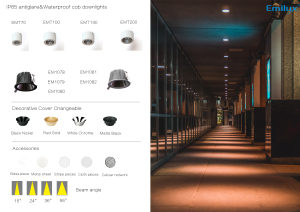
IP66 absolutely has its place in specific scenarios, such as:
High-pressure wash-down areas
Extreme rain and wind exposure without any shelter
Harsh industrial environments with aggressive cleaning routines
If your project falls into these categories, selecting IP66 or above from the start is the right decision.
In theory, “higher IP is always safer”, but in practice, over-specifying IP66 can lead to:
Higher fixture cost
Heavier fixtures, more labor-intensive installation
Fewer suppliers and longer lead times
If your environment doesn’t require high-pressure cleaning, choosing IP65 waterproof linear lights is usually the most balanced choice in terms of safety, cost and ease of installation.
Use this quick 3-question check:
Will the fixture be cleaned with high-pressure water jets?
Is it fully exposed to heavy rain and strong wind with no shelter?
Has your client explicitly requested IP66 and accepted higher cost?
If all answers are No → Go with IP65 waterproof linear lights
If 1–2 answers are Yes → Use IP66 only in critical zones, and IP65 elsewhere to balance budget and performance.
If your project needs lighting for car parks, canopies, semi-outdoor corridors or basements, and you want:
Reliable waterproof and dustproof protection without overpaying
Good light quality and easy installation
Flexible application across different areas
Then a well-balanced product like:
IP65 Waterproof Linear Light · 8W · 3CCT Switchable · CRI90 · Surface Mounted
Is a very practical choice for most real projects.
The difference between IP65 and IP66 waterproof linear lights is not about “good vs bad”, but “fit vs overkill”:
IP65 covers most canopies, car parks, corridors and basements
IP66 is for special zones with high-pressure cleaning or extreme exposure
If you’re not sure which rating is right for your project, share your site conditions and requirements with us. Our team can recommend the most suitable waterproof linear LED solution for you.